Managing information for one building is difficult enough.
Managing it across a real estate portfolio is a different problem.
Some buildings are in design. Some are under construction. Some were completed five years ago. Others are being renovated, extended or prepared for a new tenant.
Each building accumulates drawings, models, reports, decisions, approvals, issues and countless versions of the same information.
And every new project adds another layer.
For a developer or building owner, the challenge is therefore bigger than document management.
It is maintaining a reliable understanding of what is known about every building in the portfolio - today and over time.
A portfolio is constantly changing
We often think of a building project as something with a beginning and an end.
For the building owner, the reality is different.
A building may start with development and design, move through construction and handover, spend years in operation and later enter another cycle of refurbishment or redevelopment.
The information around it changes throughout that process.
A new design replaces an old one. A technical system is changed. A tenant fit-out modifies part of the building. A renovation creates another set of drawings. A consultant produces a new report. A decision made years earlier suddenly becomes relevant again.
Across a large portfolio, this is happening simultaneously in many buildings.
The result is not simply a large number of files.
It is a large number of different versions of reality.
Construction document management starts with knowing what you have
Ask a team responsible for a large real estate portfolio whether they have documentation for their buildings and the answer will usually be yes.
Ask a few more questions and the picture becomes less certain.
Do we have the latest architectural drawings?
Which model represents the building as it exists today?
What changed during the last renovation?
Where is the final documentation from the previous project?
Why was this technical solution selected?
Which issues were still open at handover?
The information may exist.
But existence and usability are two different things.
Files can be distributed between project platforms, CDEs, shared drives, consultants, contractors, local folders and archived project environments.
A building owner can therefore own the information without having a reliable overview of it.
Projects end. Buildings do not.
This is one of the fundamental problems with project-based information management.
Most construction information is organised around a project.
That makes sense while the project is active.
A team is created. A project environment is established. Drawings and models are produced. Issues are managed. Decisions are made. Eventually the project is completed and handed over.
But the building remains.
Five years later, another project begins.
And the first question is often surprisingly basic:
What information do we actually have about this building?
The new team starts opening folders, checking drawings, contacting previous consultants and trying to establish which information can be trusted.
In other words, part of the project is reconstructed before the new project can properly begin.
For an owner managing many buildings, this inefficiency repeats across the portfolio.
How to manage construction information across a real estate portfolio
Keep information connected to the building
Project structures are temporary.
The building is the permanent reference point.
That distinction becomes important when managing information across a portfolio.
A drawing may have been created for a particular project, but the information it contains describes a building.
The same applies to models, reports, decisions and technical documentation.
Instead of treating every project as a completely separate information universe, the building can become the continuous thread connecting them.
Development. Construction. Handover. Operation. Refurbishment. Another project.
Each phase adds to what is known about the same asset.
This changes the question from: Where is the old project archive?
to:
Maintain drawing version control and know what is current
Having all historical information is useful only if the team can distinguish it from what is current.
A building may have dozens of architectural plans created across several projects.
Which one should someone use today?
The same problem appears during active development.
Drawings and models evolve continuously. New versions replace old ones and changes in one discipline can affect several others.
For important information, teams need to understand:
What is the latest version?
What came before it?
When did it change?
Who provided the new information?
And increasingly:
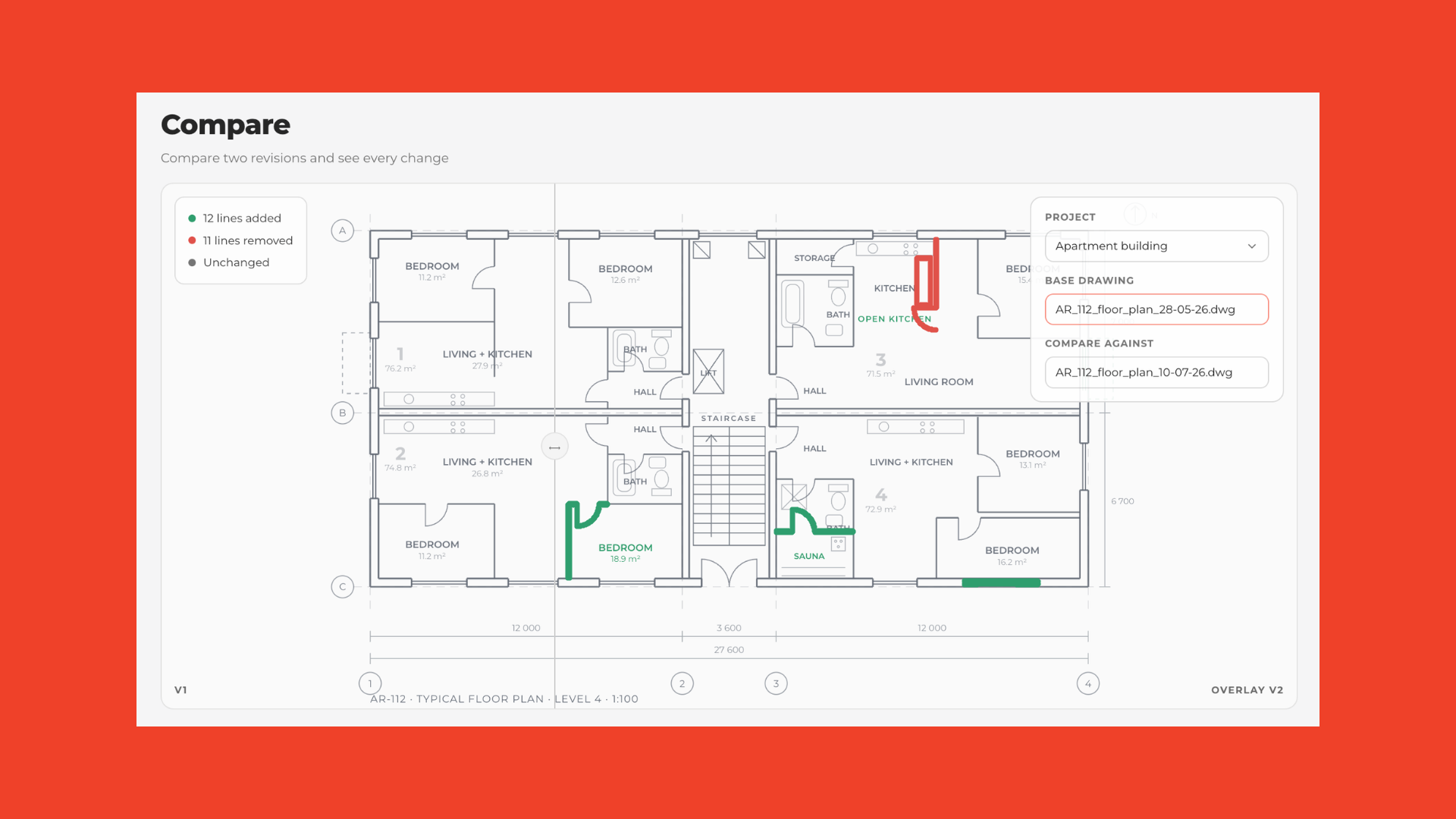
What actually changed?
Comparing versions can help identify potential changes automatically rather than requiring someone to search for every difference manually.
The professional still validates what those differences mean.
But the repetitive part of finding them can increasingly be handled by software.

Preserve why something changed
The current drawing tells you what the building looks like.
It rarely tells you why.
Why was the façade material changed?
Why was a technical room moved?
Why was one solution selected over another?
Who approved it?
Was a requirement intentionally removed or simply missed?
During an active project, the people involved may know the answers.
Years later, they may not be there.
The reasoning may be fragmented across meeting minutes, comments, issues, emails and previous versions of documents.
For a long-term owner, this matters.
A decision made during development can affect maintenance, refurbishment or another investment decision years later.
Project knowledge therefore becomes more valuable when the relationship between documents, changes and decisions survives the project that created it.
Preserve the history of the building
Most software keeps an activity log.
A file was uploaded. A document was replaced. An issue was closed.
Useful, but a portfolio owner ultimately needs something broader:
the history of the building.
When did the design change?
Which version replaced which?
What issues appeared?
What was resolved?
What information was removed?
What happened during the refurbishment?
What did the building look like before it?
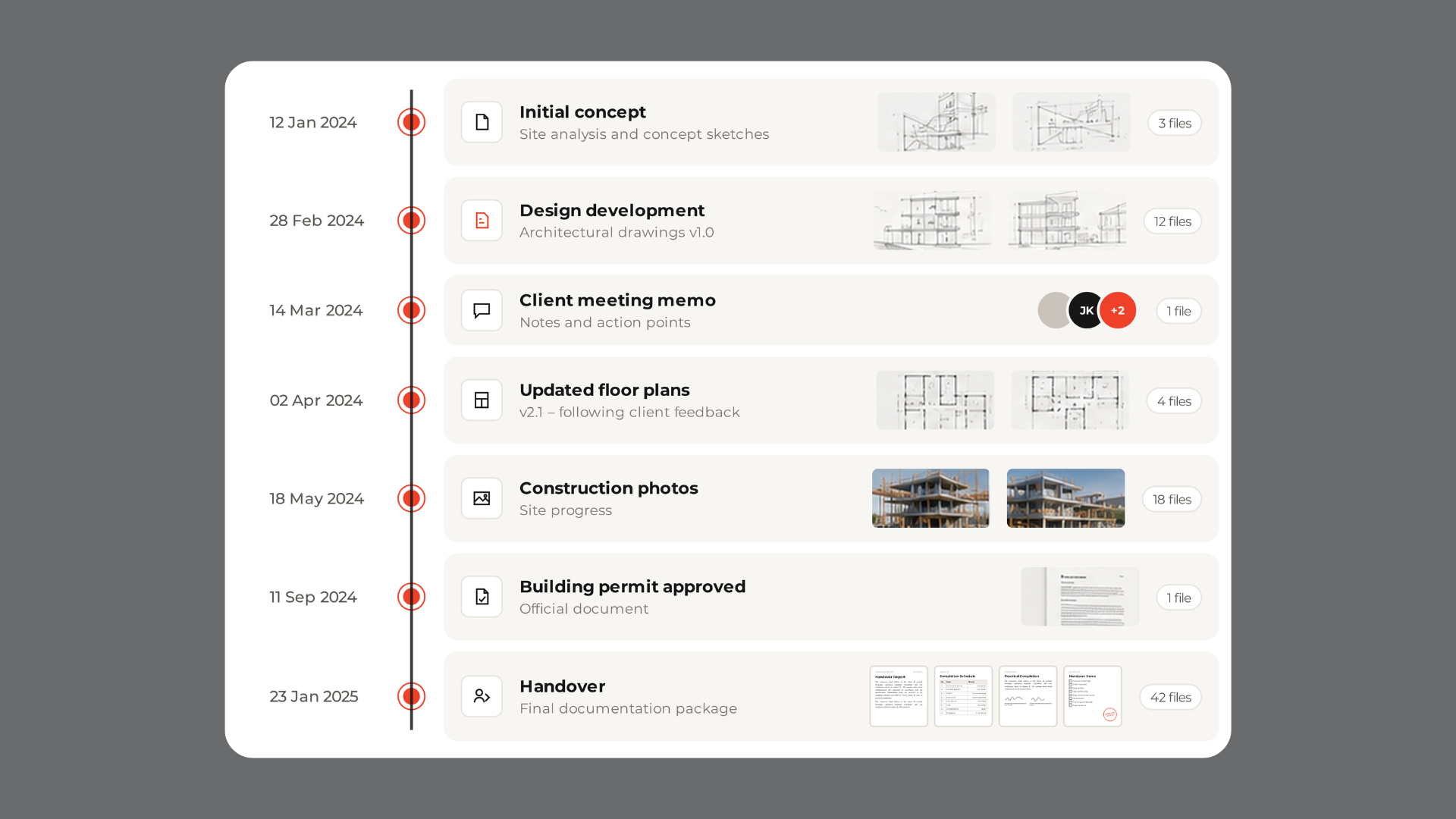
Over time, these events form a timeline of the asset.
That history becomes useful whenever somebody needs to understand the building without having participated in every project that shaped it.
Make knowledge survive people and projects
Real estate portfolios outlive individual project teams.
Consultants change.
Project managers change.
Contractors change.
Employees leave.
Software platforms change.
The building stays.
If important knowledge exists primarily in people's memories or in the structure of an old project environment, every transition creates information loss.
The goal should therefore not be to preserve every file forever.
It should be to preserve enough structure and context that someone unfamiliar with the original project can still understand the information later.
That becomes increasingly important as portfolios grow.
A person may remember where something is stored across five buildings.
Across fifty, that is no longer a reasonable information strategy.
Search by question, not by storage location
Traditional document systems assume that the user knows how information has been organised.
Building.
Project.
Folder.
Discipline.
Document.
Version.
That works when the person already knows what they are looking for.
But many important questions do not begin with a filename.
They begin like this:
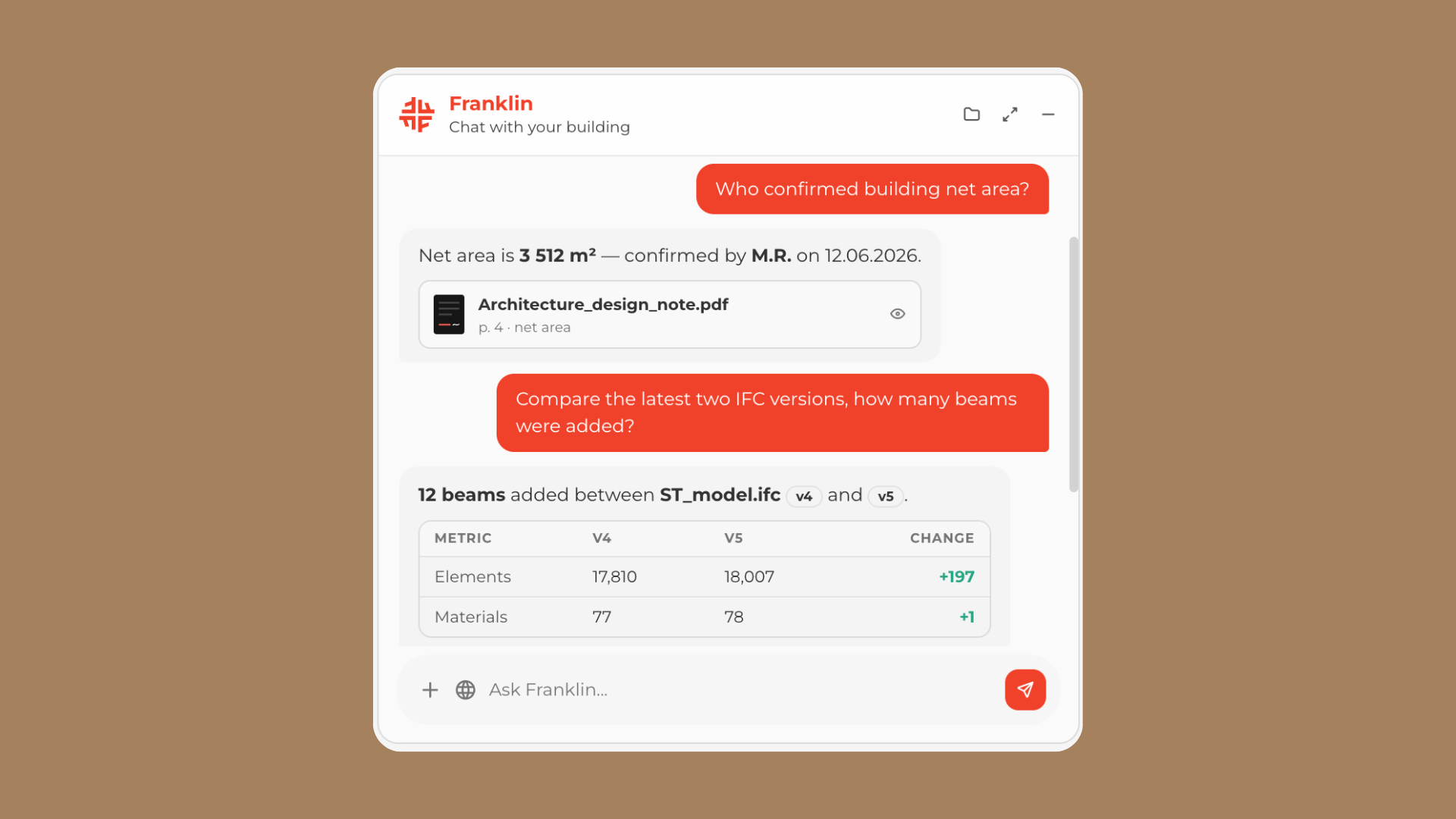
When was the ventilation system last changed?
Why did we choose this façade solution?
Which drawings changed during the refurbishment?
Do we have the final documentation for this building?
What happened before this issue was closed?
The answer may exist somewhere in the portfolio.
The difficult part is finding and connecting it.
AI is beginning to change construction document management from a storage problem into an information retrieval problem. This is where AI can fundamentally change how building information is used.
Instead of requiring the user to understand where information is stored, software can increasingly understand what the information contains and how different pieces relate to each other.
The interface starts shifting from: Where is the document?
to:
Handover should not be the end of useful information
A huge amount of knowledge is created while a building is being developed.
The team spends years making decisions, coordinating disciplines, resolving problems and documenting the result.
At handover, much of that knowledge is compressed into a final set of documents.
The files survive.
The context often does not.
For a portfolio owner, this is a strange outcome.
The moment the organisation finally owns the completed building is often the moment when the richest period of information about it becomes an archive.
It does not have to work that way.
Information created during development can remain connected to the building after the active project ends.
And when another project begins, the team does not have to start again from a folder of historical files.
They can start from what is already known.
From project information to building knowledge
The industry has become much better at storing project information.
The next challenge is making that information useful across time.
For developers and building owners, the opportunity is larger than better document management.
It is creating continuity between projects.
Drawings remain connected to their versions.
Changes remain connected to history.
Decisions retain context.
Completed projects become part of what is known about the building rather than isolated archives.
And information accumulated across many buildings becomes usable across the portfolio.
-
This is the direction Franklin is being built towards.
Franklin creates a continuous information layer around each building, bringing together drawings, models, documents, issues, versions and project history.
When a project is active, teams can understand what is changing and what has happened.
When the project ends, that information does not have to disappear into an archive.
And when the next project begins, the building does not have to start from zero.
Projects end. The building's memory should not.
Frequently Asked Questions
Construction document management is the process of organising, controlling and tracking drawings, models, reports, approvals and other information created during a construction project. Effective document management also preserves version history and changes so teams can identify which information is current and understand how it has evolved.
Construction document control is the systematic process of tracking project documents, their versions, status and changes. Its purpose is to ensure that teams can identify current information while maintaining a traceable history of previous versions and project decisions.
For developers and building owners managing multiple projects, construction documents should remain connected to the building they describe rather than becoming isolated project archives. A consistent information structure makes it possible to understand what information exists, which version is current and what changed across projects and over time.
Drawing version control requires keeping a chronological history of updates and clearly identifying which drawing is current and which versions have been superseded. Teams should also be able to see when a drawing changed, who provided the new version and, where possible, what changed between versions.
Teams need a controlled source of project information where the current drawing version is clearly identifiable and previous versions remain traceable without being mistaken for current information. Automated version tracking and drawing comparison can further reduce the manual work required to identify changes between drawing versions.
For a building owner, useful project information should not disappear into an isolated archive after handover. Drawings, models, decisions, issues and project history can remain connected to the building and provide context for operations, tenant changes, refurbishment and future development projects.
AI can help classify, search, compare and connect information across construction drawings, documents, issues and project history. Instead of relying only on folder structures and filenames, AI-based systems can increasingly help users find information by asking questions about the building or project. Technical information and automatically identified changes should still be validated by professionals.